Source anti rollover design kiddie ride for Parks, Supermarkets, and Indoor Rides
Find 30 listings for anti rollover design kiddie ride options suitable for amusement parks, supermarkets, and indoor venues. Buyers can compare specifications like voltage, seating capacity, and dimensions across multiple manufacturers.
Key considerations
Products List


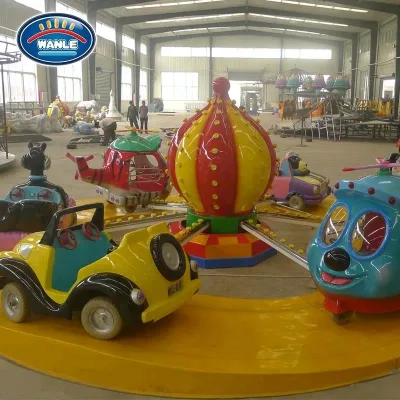


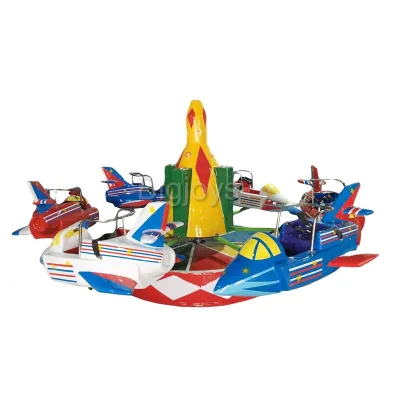
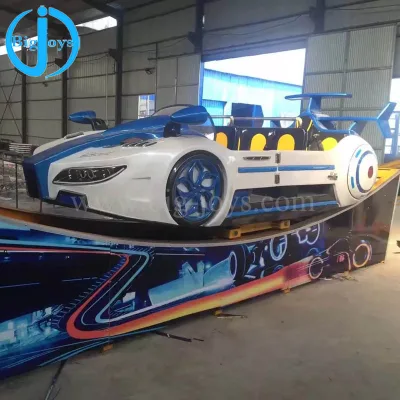
Comprehensive Sourcing Guide
Strategic Sourcing Guide for Anti-Rollover Design Kiddie Rides
Procuring amusement equipment, specifically kiddie rides featuring anti-rollover designs, requires a rigorous approach that balances safety engineering with commercial viability. For buyers in the B2B sector, the primary objective is to secure machinery that ensures passenger stability while adhering to international safety standards. The market offers a diverse array of options, ranging from electric motorcycles to self-control planes, each with unique structural requirements. This guide outlines the critical factors for sourcing these rides, focusing on technical specifications, compliance verification, cost analysis, and supplier evaluation strategies based on available industry data.
Technical Specifications and Structural Integrity
The core of an anti-rollover design lies in the mechanical and structural specifications of the ride. When evaluating potential units, buyers must scrutinize the dimensions, weight, and power requirements to ensure the ride fits the intended installation site and operates safely. The physical footprint is a primary constraint; for instance, specific models may have dimensions such as 1425570cm for compact units or significantly larger structures with a diameter of 11m and a height of 6m for larger attractions. The allowable passenger capacity is equally critical, with some units designed for 1-2 players while others accommodate up to 16 seats.
Weight is a decisive factor in stability. Heavier units, such as those weighing 150kg, often provide a lower center of gravity, which inherently reduces the risk of tipping during operation. However, the material composition plays an equally vital role. The market includes rides constructed from hardware and wood, each offering different durability profiles. Hardware-based units typically offer robustness against impact, while wooden structures may provide a distinct aesthetic but require specific maintenance. Buyers should verify the specific material grade and construction method to ensure the anti-rollover features are not compromised by material fatigue.
Power systems must also align with the ride's operational needs. Voltage requirements vary significantly, with some units operating on 220V and others requiring 380V. The power consumption, often listed around 350W for smaller units, dictates the electrical infrastructure required at the installation site. Additionally, the condition of the product must be confirmed as "New" to ensure that all safety mechanisms, including anti-rollover sensors or physical barriers, are fully functional and have not been degraded by previous use.
Compliance and Certification Verification
Safety compliance is non-negotiable in the amusement ride industry. Buyers must demand verifiable certification documents that confirm the ride meets international safety standards. The presence of a CE Certificate is a fundamental requirement for many markets, indicating that the product conforms to health, safety, and environmental protection standards. However, the mere mention of a certification on a product listing is insufficient; buyers must request the actual test reports and certification numbers to validate their authenticity.
The "Allowable Passenger" data often correlates with certification limits. For example, a ride certified for a specific number of passengers must not be overloaded beyond this limit to maintain its anti-rollover integrity. Buyers should also check for specific product standards, such as the L1300W1300H2360 mm specification, which may indicate adherence to a particular dimensional safety protocol. It is essential to verify that the certification covers the specific model being purchased, as certifications are often model-specific and not blanket approvals for a manufacturer's entire catalog.
Furthermore, the "Standard" attribute listed as "Customized" in some contexts suggests that the safety features may be tailored to the buyer's specific site requirements. In such cases, the buyer must ensure that the customized design undergoes a rigorous safety review to confirm that the modifications do not introduce new rollover risks. The "Product Standard" field should be cross-referenced with local regulations in the destination country to ensure full compliance.
Cost Drivers and Pricing Dynamics
The pricing of kiddie rides with anti-rollover designs is influenced by several variable factors. The observed price range in the market spans from $50 to over $25,000, reflecting the vast difference between simple, small-scale units and complex, large-scale attractions. The primary cost drivers include the complexity of the anti-rollover mechanism, the materials used, and the level of customization required. Units with advanced electronic controls, such as self-control planes or electric motorcycles, typically command higher prices due to the integration of sensors and safety logic.
Material costs also play a significant role. Rides constructed from high-grade hardware or specialized wood composites will be more expensive than those using standard materials. The "Appearance" attribute, often described as "Competitive Price and High Quality," suggests that buyers can find a balance between cost and performance, but this should not be taken as a guarantee of value without detailed specification comparison.
Customization is another major cost factor. While some units are "Non-Customized" with a Minimum Order Quantity (MOQ) of 1, others offer "Customized" options which may increase the unit price and extend the lead time. The packaging method, ranging from "Bubble Pack + Stretch Films + Wood Frame" to "Standard Export Packaging," also impacts the final cost, as specialized packaging is necessary to protect delicate anti-rollover components during shipping. Buyers should request a detailed breakdown of costs to understand the proportion of the price attributed to the safety features versus the base structure.
Typical Applications and Site Suitability
The application of anti-rollover kiddie rides varies based on the target demographic and the environment. The "Suitable for" attribute indicates that these rides are designed for children aged 2-14 years, as well as specific adult groups like those over 18 years for certain adventure models. This age range dictates the design of the safety restraints and the stability of the ride. For instance, rides for younger children require lower centers of gravity and more robust anti-rollover features to prevent tipping during sudden movements.
The location of installation is equally important. These rides are suitable for "Outdoor Rides" and "Indoor Rides," meaning the anti-rollover design must account for different environmental factors. Outdoor units must withstand wind loads and uneven ground, which may require additional anchoring or a wider base. Indoor units, often found in "Supermarkets" or "Amusement Parks," may have different space constraints and lighting requirements. The "Product Name" and "Type" fields, such as "Kiddie Motorcycle Car Ride" or "Self Control Plane Rides," provide clues about the intended use case.
Buyers must also consider the "Usage" environment. Rides intended for "Amusement Parks" often require higher durability and more frequent maintenance compared to those in smaller venues. The "Shipping Method" of "by Sea" suggests that these units are typically large and heavy, requiring careful logistics planning to ensure the anti-rollover features are not damaged during transit.
Supplier Evaluation and Selection Criteria
Selecting a reliable supplier is critical for ensuring the quality and safety of the ride. Buyers should evaluate suppliers based on their origin, production capacity, and track record. The "prod_origin" field indicates that many units are manufactured in "Guangdong, China (Mainland)" or generally "Made in China." While this provides insight into the manufacturing hub, buyers should verify the specific factory's capabilities and quality control processes.
The "Version" of the product, often listed as "English," is a basic indicator of the supplier's ability to communicate in the buyer's language, which is essential for technical support and troubleshooting. Buyers should also assess the "Warranty" terms, with a standard offering of "1 Year" being common. A robust warranty indicates the supplier's confidence in the product's durability and safety features.
Additionally, the "Customization" availability is a key differentiator. Suppliers that offer both "Non-Customized" and "Customized" options demonstrate flexibility and a broader range of engineering capabilities. Buyers should request case studies or references from previous clients to verify the supplier's experience with anti-rollover designs. The "Condition" of the product being "New" is a baseline requirement, but buyers should also inquire about the manufacturing process to ensure that the anti-rollover features are integrated during production rather than added as an afterthought.
Quality Control and Long-Term Procurement Considerations
Quality control is the final barrier before the ride reaches the end-user. Buyers must implement a strict inspection protocol that includes verifying the "Material" quality, checking the "Weight" specifications, and testing the "Voltage" and "Power" systems. The "prod_packing" method, such as "Export Packaging" or "Standard Export Packaging," should be inspected to ensure that the ride arrives without damage that could compromise the anti-rollover mechanisms.
Long-term procurement considerations involve maintenance and operational safety. The "Age" of the target users and the "Running Height" of the ride, such as a maximum of 2m, influence the maintenance schedule. Buyers should establish a maintenance plan that includes regular checks of the anti-rollover sensors, structural integrity, and electrical systems. The "Size" of the unit, whether fixed at specific dimensions or "According to Your Order," affects the availability of spare parts and the ease of maintenance.
Finally, buyers should consider the "Standard" of the product, which may be "Customized" or follow a specific model number like "ZZC-SP1635." This standardization helps in tracking the product's history and ensuring that any future replacements or upgrades are compatible. By focusing on these long-term factors, buyers can ensure that the anti-rollover design remains effective throughout the lifecycle of the ride, providing a safe and enjoyable experience for all users.
Comparative Analysis of Ride Specifications
To assist buyers in making informed decisions, the following table summarizes key specifications observed in the market for anti-rollover kiddie rides. This comparison highlights the diversity in dimensions, capacity, and power requirements, which are critical for matching the ride to the specific site constraints.
| Product Attribute | Example Specification A | Example Specification B | Example Specification C |
|---|---|---|---|
| Product Type | Kiddie Motorcycle Car Ride | Self-Control Plane | Merry Go Round |
| Dimensions | 1425570cm | 11m Diameter, 6m Height | L1300W1300H2360 mm |
| Capacity | 1-2 Players | 16 Seats | <Certification:CE |
| Voltage | 220 V | 380V | 220 V |
| Material | Hardware | Wood | Hardware |
| Weight | 150kg | N/A | N/A |
| Age Group | 2-14 Years | >18 Years | 2-14 Years |
| Customization | Available | Customized | Non-Customized |
| Origin | Guangdong, China | Made in China | Guangdong, China |
This table illustrates the variability in specifications. Buyers must carefully match these attributes to their specific operational needs. For instance, a ride with a 16-seat capacity and 380V power requirement will need a different electrical infrastructure than a 1-2 player unit running on 220V. Similarly, the material choice between hardware and wood will influence the maintenance strategy and the longevity of the anti-rollover features. By analyzing these specifications in detail, buyers can select the most appropriate ride for their venue, ensuring both safety and operational efficiency.
FAQs
What certifications do anti rollover design kiddie rides have?
These rides typically carry CE certification to confirm safety compliance. Buyers must verify the specific CE Certificate for the model to ensure it meets international standards before purchase.
Can I customize the specifications of these kiddie rides?
Yes, customization is available for certain models to meet specific site needs. However, some units are sold as non-customized standard products with fixed dimensions and features.
Which voltage requirements apply to these amusement rides?
Voltage requirements vary by model, with options including 220V and 380V systems. Buyers must check the specific product specifications to ensure their site electrical infrastructure is compatible.
How many passengers can these rides safely accommodate?
Capacity ranges from 1-2 players for small units to 16 seats for larger attractions. The allowable passenger limit is strictly defined by the certification and structural design of each model.
What materials are used to construct these rides?
Construction materials include hardware and wood, each offering different durability profiles. Hardware units provide robustness against impact, while wooden structures offer distinct aesthetic qualities.
What is the minimum order quantity for these products?
The minimum order quantity can be as low as 1 unit for standard items. Some customized options may have different thresholds, so buyers should verify the specific MOQ per model.